
The Lost & Last Generations of Jay McInerney
The conclusion of the Russell & Corrine Calloway Tetralogy

At 71 years old, Jay McInerney has more in common with Gatsby than Fitzgerald. This isn’t a comment on his prose, which has mellowed gracefully novel by novel since his ecstatic era-defining debut, Bright Lights, Big City, but instead a consequence of his biography. McInerney was a main character of the 1980s New York coke and champagne carnival, popping bottles from the Hamptons to Manhattan, but this Jay didn’t die at the end. Hell, he even got the girl, an old-money heiress, the granddaughter of William Randolph Hearst, securing his seat on the Mount Olympus of Manhattan elites.
Vanity Fair hailed him as “Our modern-day Fitzgerald!” and he was a founding member of the Literary Brat Pack, which also featured, the pop avant-garde writer, Bret Easton Ellis–who surpassed McInerney in notoriety with American Psycho–a sort of bookish version of The Brat Pack, the group of actors involved in films of the 1980s that reflected the way a generation saw itself. Think The Breakfast Club or St. Elmo’s Fire. Movies are no longer central to youth culture, or culture in general, and reading, let alone novels, takes no quarter in the population at large. Timothée Chalamet was right about opera and ballet, but it’s also true of movies, music videos, bands, novels, short-story collections—that’s all, folks! There are no poets in the land of looksmaxxing and prediction markets. A young man has a better chance of seeing himself as the subject of a Louis Theroux documentary than as the hero in a novel, not that he would watch or read either, but his parents might message him about them.
Yet still, McInerney believes in the novel, and he beats on, against the current culture, borne back ceaselessly into the past. He is always on the lookout for American literature’s new shining light. He reviewed Sean Thor Conroe’s FUCCBOI with earnest encouragement. Though it’s telling that the only recent debut novel McInerney acknowledges in his upcoming, See You On The Other Side, the conclusion of his Russell and Corrine Calloway tetralogy of novels, is Sally Rooney’s, an Irish writer. In See You On The Other Side, Russell Calloway, a sort of down-from-Olympus version of McInerney himself, as an editor rather than a writer, is having dinner with a young writer to consider publishing her novel whilst simultaneously dabbling with the possibility of an affair. They talk about what they’re reading, what got them reading in the first place, what got them writing, and then Russell announces, “The world doesn’t need another first novel or, at least, it doesn’t know it does, until someone like Sally Rooney comes out of nowhere and shows us all over again that we do.” Of course, this is years after Sally Rooney’s metronymic prose had already become an institution, with PR and marketing resembling a quaint, glamourless simulacrum of publishing’s glory days, and Rooney herself a late-blooming Greta Thunberg with an MA and a lilt. It’s one of the few declarations in the novel that stands out as slightly pleading, alongside the constant reiteration, by almost every female character, that Russell is “incredibly good-looking” for his age.
What McInerney won’t say is what he’s really looking for in a debut American novel, especially by a young male novelist, is himself–and so are we. American novelists of the social-realist tradition have always attempted to write the how we live now novel or, more accurately, how we lived then. There needs to be “time to absorb an event,” according to the novelist Don Delilo, for a writer’s understanding to move from raw shock to meaning. Norman Mailer, who’s mentioned a few times in See You On The Other Side, had a rule-of-thumb: 10 years. That sort of patience and thoughtful deliberation doesn’t fit in the world of Trump’s second term. Last week seems like another life. Reading the first page of the novel, my initial thought was, “really a COVID novel?” An earth-stopping event that already feels like the distant past. You know, six years ago. By the end, I realized McInerney pulled it off. It works.
And, really, I shouldn’t have doubted. Themes of seduction and the dangers of passion have been central to the American novel since, well, the first one, The Power of Sympathy by William Hill Brown in 1789. McInerney has built the Calloway series as an investigation into the personal fallout of major events, following the marriage of a Manhattan couple as they navigate the 1987 crash, 9/11, the 2008 crash, and now, in the final novel, COVID. From the youthful ambition of Brightness Falls, the communal horror of The Good Life, the search for meaning in Bright, Precious Days, McInerney ends this series on the question of legacy, on who comes next and how, and if, which despite his sunny prose, and his protagonist’s charming reckless abandon, reminds us that somethings don’t work out. In fact, things end.
The dark irony of See You On The Other Side is that McInerney has written the Millennial Novel in the way it was written in previous generations–making sense of a major generational event. He writes as if the novel is central to how our culture makes sense of itself. That poetry gives meaning to our lives and that there is a tradition in American letters to uphold. Ain’t it pretty to think so?
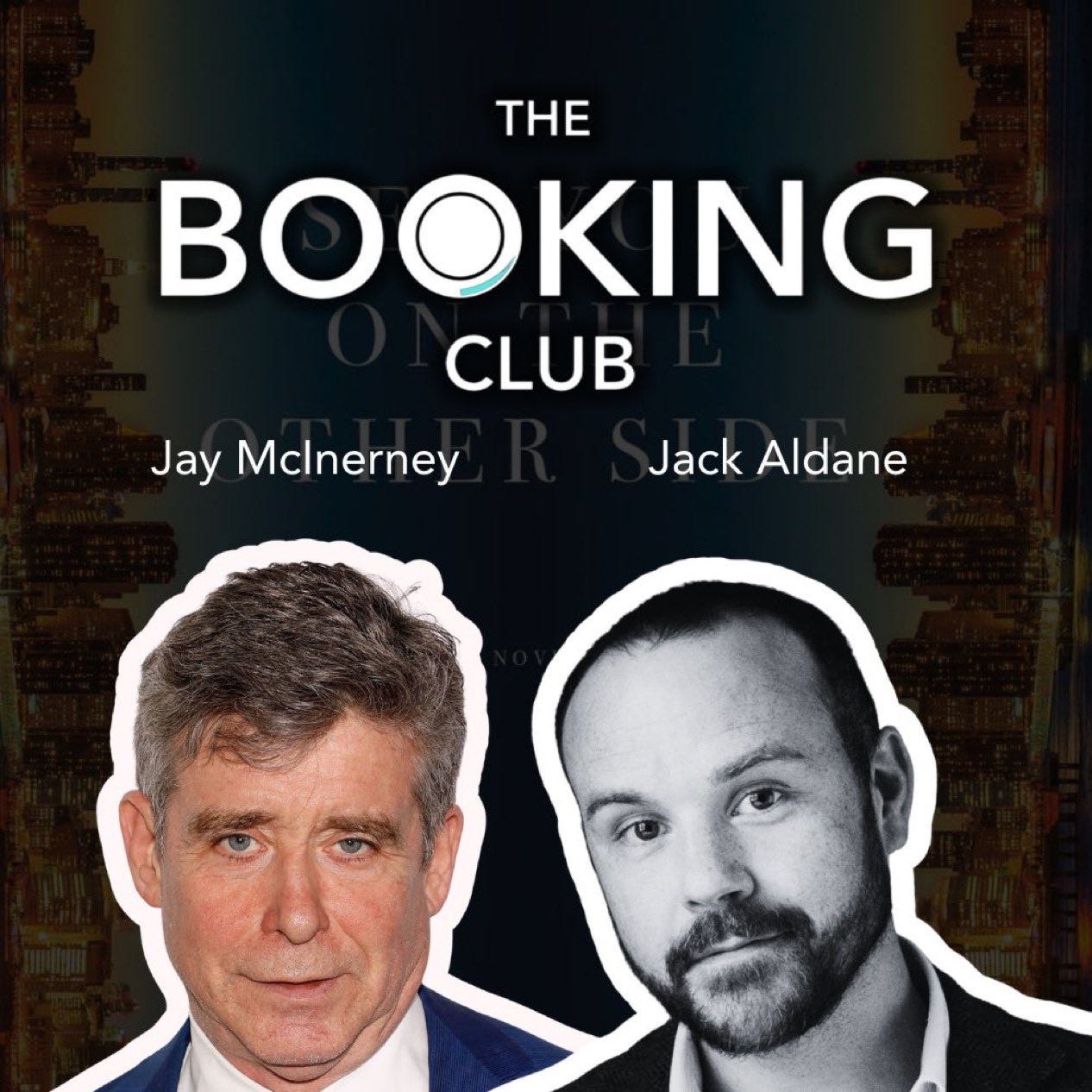
Listen to Jack Aldane talk with Jay McInerney on The Booking Club Podcast